 Author
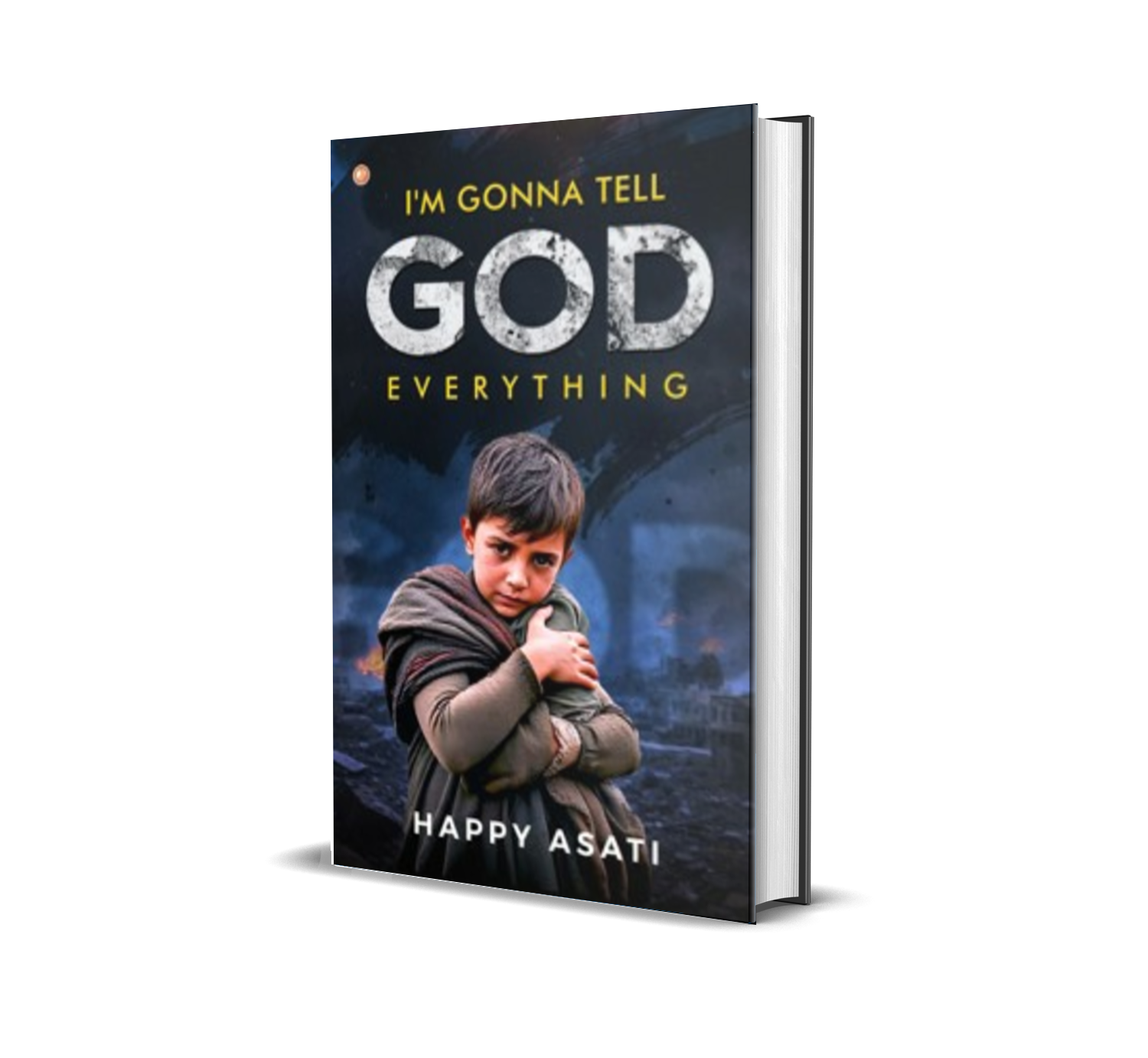
I’m Gonna Tell God Everything
A story that will break your heart and awaken your soul
Set in war-torn Syria, it’s a powerful story of love, loss and hope. Told through the eyes of a 5-year-old boy, his innocence carries a message the world can’t ignore.
The story
Amid the ruins of war-torn Syria, I’m Gonna Tell God Everything is a deeply moving and unforgettable story of a child’s innocence shattered by violence, a mother’s relentless love, and a message so powerful it shakes the world.
At just five years old, Ahmed sees the world with wonder despite the destruction around him. His days are filled with small joys—running through the fields, playing with his stuffed lamb, and listening to his father’s bedtime stories. But in the background, shadows loom. The bustling souq grows quieter, friends disappear overnight, and whispers of war grow louder.
His mother, Fatima, fights to shield him from the horrors outside their door, clinging to the hope that love can be enough to protect her child. His father, Youssef, teaches him the values of courage and kindness, even as the world grows more ruthless. But the fragile bubble of childhood cannot withstand the cruelty of war.
One fateful evening, their neighbourhood is reduced to rubble in a devastating airstrike. Ahmed, critically injured, is rushed to a makeshift medical camp, where his parents watch helplessly as his tiny body weakens. As he drifts in and out of consciousness, he turns to his mother and, in a voice barely above a whisper, says the words that will echo across the world:
“Ammi, I’m tired… I think I should go now… But don’t worry… I’m gonna tell God everything.”
With those final words, a child’s voice transcends the bombs, bullets, and borders. His story, captured by a foreign journalist, spreads across the globe, igniting an outcry that forces the world to face the cost of war. His words become a symbol of resistance, a haunting reminder of the innocent lives caught in the crossfire of power and politics.
But Ahmed’s story does not end with his death. Fuelled by grief, Fatima transforms her pain into purpose, dedicating herself to ensuring that no child is forgotten. She establishes a school in Ahmed’s name, a sanctuary where children can learn, laugh, and dream—where their innocence is not stolen by war.
I’m Gonna Tell God Everything is more than a novel. It is a cry for justice, a tribute to every child lost to senseless violence, and a reminder that even in the darkest moments, a single voice can change the world.
This is Ahmed’s story. But more than that, it is the story of every child whose laughter has been drowned by war. And it is a story that must be told.
Why this story?
Some stories are written to entertain.
Some are written to inspire.
And some stories demand to be told because remaining silent feels impossible.
I’m Gonna Tell God Everything was born from that third kind. Set against the devastating reality of war-torn Syria, the story follows Ahmed, a five-year-old boy, whose childhood is stolen by a world he is too young to understand.
For Ahmed, war is not about politics, borders or ideologies. It is the sound of explosions that interrupt his sleep. It is the fear in his mother’s eyes. It is the empty spaces left behind when people he loves disappear. It is a childhood where innocence has to make room for survival.
Through Ahmed’s eyes, the story asks questions that have no easy answers:
- What happens when children inherit the consequences of decisions they never made?
- What does war look like through the eyes of a child?
- And who listens when an innocent child has no one left to speak for him?
This is not a story about choosing sides. It is a story about humanity—about innocence, loss, love, hope and the unbearable cost of conflict.
And above all, it is a reminder that behind every statistic is a human being—with a name, a family, a dream and a story.
Author’s note
I have always believed that stories can make us pause. They can take us somewhere we have never been, introduce us to people we have never met, and make us feel emotions that might otherwise remain distant.
I’m Gonna Tell God Everything is one such journey. Ahmed is only five years old. He should be thinking about games, school, toys and the simple joys of childhood. Instead, he finds himself growing up in the shadow of war.
While writing his story, I kept returning to one thought: a child should never have to understand war.
Children should not have to recognise the sound of bombs. They should not have to understand loss before they understand life. They should not have to learn fear before they learn freedom. Yet across the world, countless children have lived through realities that no child should ever experience.
Ahmed’s story is fictional, but the emotions behind it are painfully real. I wanted to tell this story through the eyes of a child because innocence has a way of revealing truths that adults often complicate. Ahmed does not understand the reasons behind the violence. He only understands that his world is disappearing.
And as his journey unfolds, his final words become more than a child’s statement. They become a question directed at all of us:
If the world refuses to listen, who will hear the truth?
I hope this story makes you feel. I hope it makes you pause. And perhaps, when you close the book, I hope you look at the world around you a little differently.
Because sometimes, the most powerful voice is the one that simply tells the truth.
Key themes
🕊️ Innocence Lost
At the heart of the story is a child whose innocence is slowly replaced by fear and uncertainty. Ahmed represents the millions of children whose childhoods are disrupted by circumstances beyond their control.
💔 The Human Cost of War
War is often discussed through numbers, headlines and political events. This story brings the focus back to the individual—the child, the mother, the family and the human lives behind those numbers.
👦 Childhood in the Shadow of Conflict
Ahmed’s world is fundamentally different from the childhood every child deserves. His experiences highlight how conflict affects education, family, dreams, safety and the simple joys of growing up.
❤️ A Mother’s Love
Amid destruction and uncertainty, a mother’s love becomes a source of strength. The relationship between Ahmed and his mother, Fatima, represents the instinctive bond between a parent and child—and the lengths to which love will go to protect family.
🏠 Home & Belonging
Home is supposed to mean safety. For Ahmed, that meaning is constantly threatened. The story explores what happens when the place a child calls home becomes surrounded by fear, destruction and uncertainty.
😔 Loss & Grief
Ahmed experiences loss far too early in life. The story explores grief not simply as the loss of people, but as the loss of childhood, security, dreams and an ordinary future.
🌍 Humanity Beyond Borders
The story deliberately moves beyond political arguments and geographical boundaries. At its centre is a simple idea: human suffering does not belong to one country, religion or community.
🕯️ Hope in Darkness
Even in the darkest circumstances, human beings continue to search for hope. Ahmed’s dreams, memories and relationships represent that small but persistent light that survives even when everything around him seems to disappear.
⚖️ Innocence vs. Injustice
Ahmed has done nothing to deserve the world he has inherited. His story raises difficult questions about justice, responsibility and the consequences that children are forced to bear for decisions made by adults.
🙏 Faith & The Search for Answers
When human beings fail to provide answers, people often turn toward something greater than themselves. Ahmed’s final thought—“I’m gonna tell God everything.”—captures a child’s desperate belief that somewhere, somehow, someone will finally listen.